Introduction
Starting a business is an exciting and challenging journey. When bootstrapping a startup, entrepreneurs often face numerous financial hurdles with limited resources. Unlike businesses that rely on external funding from venture capitalists or angel investors, a bootstrapped startup is funded solely by the founder’s savings or profits from early sales. In such cases, a strong financial model becomes crucial for decision-making and long-term survival. This article explores the intricacies of Bootstrapped Financial Modeling for Startups and provides strategies to help founders build and maintain a successful financial plan.
What Is Startup Bootstrapped Financial Modeling?
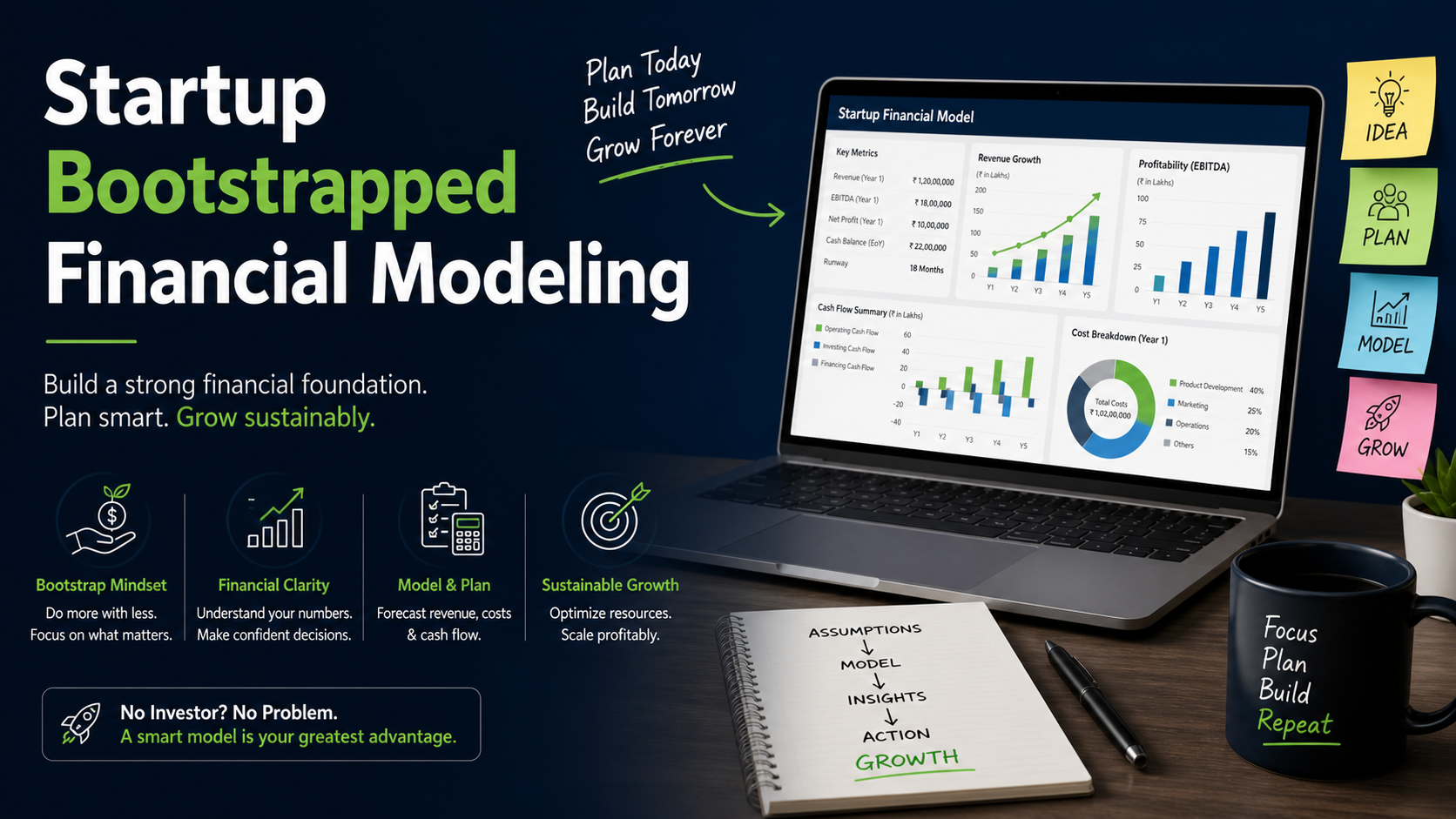
Bootstrapped financial modeling involves creating a financial plan that helps entrepreneurs understand their cash flow, expenses, and potential revenue without relying on outside investment. This financial model should reflect the startup’s current financial position and forecast future financial outcomes, helping the founder make informed decisions about spending, hiring, and scaling.
Bootstrapped startups typically work with tighter budgets, making it essential to identify every penny’s worth of impact on the business. A strong financial model will allow entrepreneurs to allocate resources efficiently, manage risks, and avoid unnecessary expenditures. Unlike other forms of startup financing, bootstrapping demands a well-structured model that ensures sustainability through internal revenue generation.
Why Financial Modeling Is Crucial for Bootstrapped Startups
Many startup founders assume that a financial model is only necessary when external funding is involved. However, bootstrapped startups face even more significant financial constraints, making accurate forecasting and strategic planning more important than ever. A financial model provides:
- Clarity on Cash Flow: It helps identify when money will be needed and how much, reducing the likelihood of running out of funds.
- Budgeting and Planning: It allows the founder to allocate resources to the right areas, ensuring the essential needs are met while also planning for future growth.
- Risk Management: Financial models highlight areas where risks are most significant, such as cash shortages or market fluctuations, enabling proactive management.
- Attracting Potential Investors or Partners: While bootstrapping initially means no external funding, having a solid financial model can serve as a strong pitch to investors if the business decides to seek funding in the future.
In short, financial modeling for bootstrapped startups is not just a good practice but a necessity for success.
Key Components of a Bootstrapped Financial Model
A comprehensive financial model for a bootstrapped startup should consist of several key components that provide a clear picture of the company’s financial health. These components include:
- Revenue Streams: Identify and forecast the startup’s revenue sources. For example, if you are in a subscription-based business, you should account for recurring revenues.
- Cost Structure: Document all operational expenses, including fixed and variable costs. Fixed costs can include salaries, rent, and software subscriptions, while variable costs may include raw materials, sales commissions, and marketing expenses.
- Profit & Loss Statement (P&L): This statement is critical for understanding how revenue translates into profit. It outlines income, costs, and taxes, helping you analyze the profitability of your startup.
- Cash Flow Statement: A cash flow statement provides insight into how money moves in and out of the business. It’s essential for bootstrapped startups because it helps prevent cash shortages, especially when operating on a tight budget.
- Balance Sheet: The balance sheet gives a snapshot of the startup’s assets, liabilities, and equity. It helps you understand your business’s financial position at any given time.
- Break-even Analysis: This analysis helps determine when the startup will begin to make a profit. It considers fixed and variable costs, sales volume, and pricing strategy.
- Financial Forecasts: Creating financial forecasts for the next 12-36 months allows you to project how the business will grow. It’s important to be conservative with revenue projections to avoid overestimating cash inflows.
Steps to Create a Startup Bootstrapped Financial Model
Creating a startup bootstrapped financial model requires a structured approach. Here’s a step-by-step process to help you build a robust financial model for your startup:
- Understand Your Startup’s Financial Health
Before diving into projections, take stock of your current financial situation. Review your existing assets, liabilities, cash flow, and equity. This will form the base of your financial model and help you determine your starting point.
- Identify Key Metrics and KPIs
Focus on key performance indicators (KPIs) that will impact your business’s financial growth. These may include customer acquisition cost (CAC), lifetime value (LTV) of a customer, churn rate, and average order value (AOV). These metrics will drive your decisions about budgeting, marketing, and scaling efforts.
- Forecast Revenue and Costs
Use your current data to project future revenue. Start with realistic assumptions, such as the expected number of customers or units sold in a given period. Forecast your costs based on historical data, industry standards, and any planned growth or changes in operations.
- Include Sensitivity Analysis
A sensitivity analysis evaluates how changes in key assumptions—like price changes, marketing spend, or sales volume—could affect your financial model. This helps you understand the risks and uncertainties associated with your business.
- Adjust for Bootstrapping Limitations
Bootstrapping means you might have limited resources, so consider cash flow constraints and the timing of expenses. Prioritize spending on essentials like marketing, product development, and operations while cutting back on unnecessary luxuries.
- Review Regularly and Adjust
Financial models should not be static. As your business grows and market conditions change, update your financial model regularly. This will ensure that your financial strategy remains aligned with your goals.
Common Pitfalls in Bootstrapped Financial Modeling and How to Avoid Them
While financial modeling is vital, many bootstrapped startups make common mistakes that can derail their financial strategy. Here are some pitfalls to watch out for:
- Overestimating Revenue: Many startup founders project high revenues based on overly optimistic assumptions. Always use conservative estimates for revenue, especially if your business is in the early stages. Factor in potential setbacks like slow customer acquisition or market fluctuations.
- Underestimating Costs: Don’t forget to account for all operating costs, even the small ones. Failing to do so can result in inaccurate cash flow projections and unexpected financial strain.
- Lack of Flexibility: Financial models should be flexible enough to accommodate changes. If your business experiences a sudden shift in market conditions or operational requirements, you need to adjust your financial model accordingly.
- Not Tracking KPIs: Ignoring KPIs such as customer retention and sales cycle length can cause you to miss early warning signs of financial issues. Regularly monitor these metrics to stay on top of your business’s performance.
- Failing to Plan for Scaling: Bootstrapped startups often focus heavily on short-term survival and neglect long-term planning. It’s important to include scaling plans in your financial model so you’re prepared for growth.
Financial Modeling for Profitability and Sustainability
One of the greatest challenges for bootstrapped startups is achieving profitability while remaining sustainable. A financial model should focus on balancing short-term profitability with long-term growth.
- Optimize Operational Efficiency: Cut unnecessary expenses and automate where possible. Efficient operations will allow your startup to thrive with limited resources.
- Strategic Cash Management: Keep a close eye on cash flow. Delays in customer payments, unforeseen expenses, or slow revenue growth can threaten a bootstrapped startup’s survival.
- Maximize Customer Lifetime Value (LTV): Focus on creating loyal customers. The longer they stay with you, the more profit you can generate without acquiring new customers constantly.
Scaling Your Bootstrapped Startup Through Financial Strategy
While the initial stages of a bootstrapped startup are typically focused on survival, the goal is eventually to scale the business. Financial modeling plays an important role in this process.
- Reinvestment Strategy: Reinvest profits back into the business for growth. Focus on scaling areas that will generate the most return, such as marketing, product development, or talent acquisition.
- Diversify Revenue Streams: Consider expanding your revenue streams to decrease reliance on a single source. For example, if you are a product-based business, think about launching services or digital products.
- Strategic Partnerships: Partnerships can help you scale more quickly without significant upfront capital. Look for complementary businesses that share your target audience but offer different services.
Conclusion
Mastering Startup Bootstrapped Financial Modeling is essential for every entrepreneur navigating the challenges of bootstrapping a startup. A well-crafted financial model helps make informed decisions, avoid financial missteps, and ultimately achieve profitability and growth. By understanding key components like revenue streams, costs, and cash flow, as well as implementing strategic planning for scalability, you’ll be better equipped to build a sustainable business without relying on outside funding.
Building a successful startup on a bootstrapped budget requires discipline, foresight, and a solid financial model that can adapt to changing circumstances. If done correctly, bootstrapping can lead to immense rewards—both financial and personal.
Thetopus.co.uk

 1
1